
Consuelo Pacheco
Contemporary Dancer, Movement Educator & Somatic Researcher
My experience with dance began in childhood and has influenced my way of experiencing the world. I am fascinated by the connection between Movement, Somatics, and Ecology: three dimensions guiding my curiosity about the living. I explore embodiment as a fluid ecosystem, where every movement is a trace of our biological heritage and a response to the environment we inhabit.
I am dedicated to the study and practice of methods and scores that cultivate a deep awareness of presence in improvisation and performance. Over the past fifteen years, the practices guiding my research have been Contact Improvisation, Tuning Scores, and Contemplative Dance Practice.
I explore the relationship between dance and somatics to understand how body-mind organization and integration influence the act of dancing, through the study of Body-Mind Centering®.
Currently completing my certification as a Somatic Movement Educator (SME) through the Body-Mind Centering® program. Coordinating the Dance program at Spazio Seme – International Arts Centre in Arezzo, Tuscany.
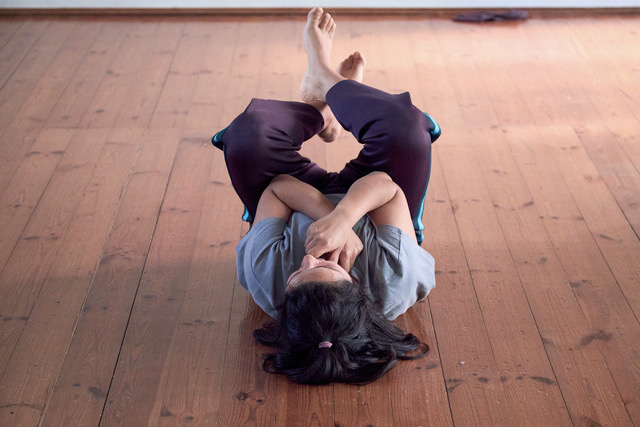
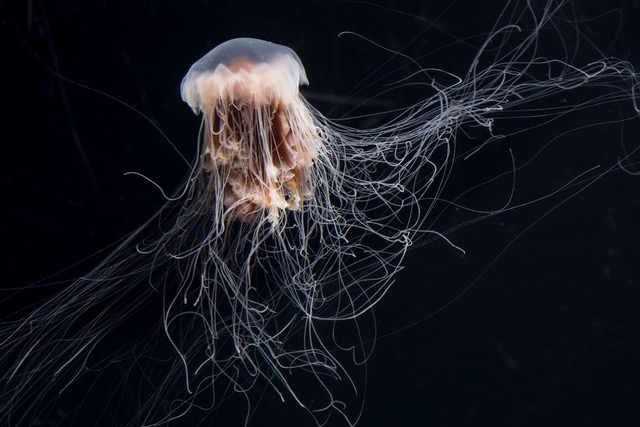
Sense of Wonder – Somatic into Contact Improvisation
Human movement replicates nature’s evolutionary process. Taking the time to explore the aquatic habitat allows us to discover our own nature through the observation and exploration of early invertebrate ecosystems. The somatic experience invites us to discover the Basic Neurocellular Patterns, which are the primordial language of our bodies. Through them, we construct the language of our dance and our relationship with the environment. We will spend time thinking of ourselves as a living landscape built from micro and macro movements, revealing a perception of ourselves that is more integrated and connected to the world. Every cell has a cyclical life story that underpins our existence and allows for our continuous self-transformation. Our body is composed of a large amount of fluids, which sustain an intelligence that allows us to inhabit our structure in a more efficient and embodied way, like an open and porous landscape, ready to encounter other bodies.
How can we access a deep sense of wonder toward movement, opening up the following questions:
How do the quality, form, and presence of the prevertebral stage of development support the development of vertebral mobility?
How do invertebrate and vertebrate qualities relate to and balance each other in our mobility and in our interactions with other bodies?